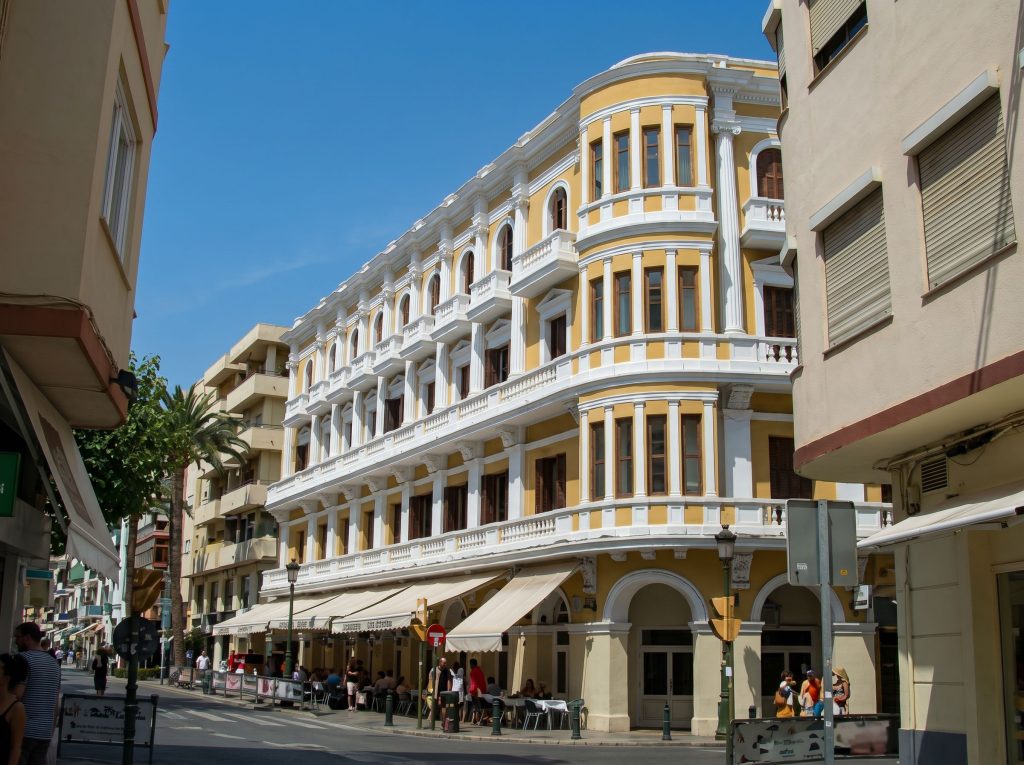
If you’ve ever dragged a wheeled suitcase up the steep, slick cobblestones of Dalt Vila in mid-July, you already know Ibiza is built on some serious history. Most people fly in for the superclubs out in San Rafael, completely missing the fact that they are partying on an island that has survived over two millennia of invasions, trade wars, and sieges.
An Island Defined by Pine Trees and Salt
Ibiza and its smaller southern neighbor, Formentera, make up the Pityusic Islands. The Greeks called them “Pityoûssai”—the pine-clad islands. Rent a Fiat Panda and drive inland toward the 475-meter peak of Sa Talaia, and you’ll immediately get it. The thick smell of sun-baked pine needles is everywhere. At 572 square kilometers, Ibiza isn’t massive, but its 200 kilometers of coastline are dramatically jagged, offering little shelter if the wind suddenly turns.
From Phoenician Outpost to Carthaginian Port
Long before the first tourist stepped off a ferry, the Carthaginians founded the port of Ibosim (now Ibiza Town) in 654 BC. They weren’t here for the weather. They wanted the salt from the Ses Salines flats. You can still see the massive white salt mountains today as you drive out of the airport—it’s a 2,600-year-old industry that never stopped.
If you want physical proof of this era, skip the crowded beach bars one afternoon and pay the €2.40 entry fee at the Puig des Molins necropolis. It is one of the largest Carthaginian burial sites on earth. Down at Sa Caleta—a UNESCO World Heritage site flanked by crumbling red clay cliffs and right next to a seafood restaurant that charges way too much for paella—you can walk through the excavated foundations of the original 8th-century BC Phoenician settlement.
The Roman Deal and the Dark Ages
When Carthage finally fell to Rome, the locals in Ibosim saw the writing on the wall. They cut a deal. By allying with the Romans, the island avoided being burned to the ground and was granted the status of a “Confederate City.” For centuries, they quietly exported salt, purple dye, and sheep’s wool across the Mediterranean.
But when the Roman Empire eventually collapsed, the island was left completely exposed. Vandals and Byzantines passed through, mostly just taking what they wanted. Ibiza slipped into a long, dark period of isolation, dropping entirely off the geopolitical radar.
Yebisah and the Islamic Golden Age
The Moorish forces arrived in 711 CE, renaming the island Yebisah. For the next 500 years, Islamic culture completely rewired the island’s infrastructure. They brought in advanced irrigation techniques—stone water channels you can still spot if you hike around the rural center—and planted the almond, olive, and citrus groves that still define the northern valleys.
If you’ve ever found yourself hopelessly lost looking for a specific tapas bar in the winding, narrow alleys of Ibiza Town’s old quarter, you have Moorish urban planners to thank. Those labyrinthine streets were intentionally designed to maximize shade and confuse invaders. On August 8, 1235, Catalan forces conquered the island. The Catalans took over the government and the religion, but the Moorish agricultural and architectural blueprints remained intact.
The Five Municipalities of Modern Ibiza
Today, the island’s administration is split into five distinct municipalities. Crossing the borders is barely noticeable on a map, but the street-level reality shifts completely.
- Eivissa (Ibiza Town): The capital. The UNESCO-protected Renaissance walls of Dalt Vila tower over the harbor. Down below, the port area is a chaotic mix of super-yachts, designer boutiques, and a chronic shortage of parking spaces.
- Sant Antoni de Portmany: Yes, it’s famous for the sunset crowds at Café del Mar and the cheap pints in the West End, but look past the neon. It started as a humble fishing village, and the wide, natural bay has been sheltering ships since the Roman era.
- Santa Eulària des Riu: Home to the island’s only “river”—which, let’s be honest, is usually a bone-dry trench by August. It is significantly quieter here. The long promenade is strictly family-friendly, and the back streets hide some fantastic, unpretentious €15 menú del día joints.
- Sant Josep de sa Talaia: The largest district. It holds the airport, the looming rock of Es Vedrà, and top-tier beaches like Cala Comte and Cala Bassa. A word of warning: Cala Comte is completely gridlocked by 10:30 AM in the summer, and the ATM at the nearby beach club will hit you with a €3.95 withdrawal fee.
- Sant Joan de Labritja: The rugged north. You’ll spend most of your time here dodging rental scooters on the winding mountain roads. It holds onto the island’s 1970s bohemian hangover, full of whitewashed villages, weekend craft markets, and rocky coves where the water is dead calm.
Living Evidence
You don’t need a museum ticket to understand Ibiza’s past. You can taste it in a heavy bowl of sofrit pagès stew at a plastic table in San Mateu. You can hear it in the harsh, consonant-heavy Catalan dialect spoken by the older guys drinking espresso at the local bars. It is an island that has spent 3,000 years absorbing foreign fleets, traders, pirates, and tourists, yet somehow manages to keep its own stubborn, calloused soul intact.