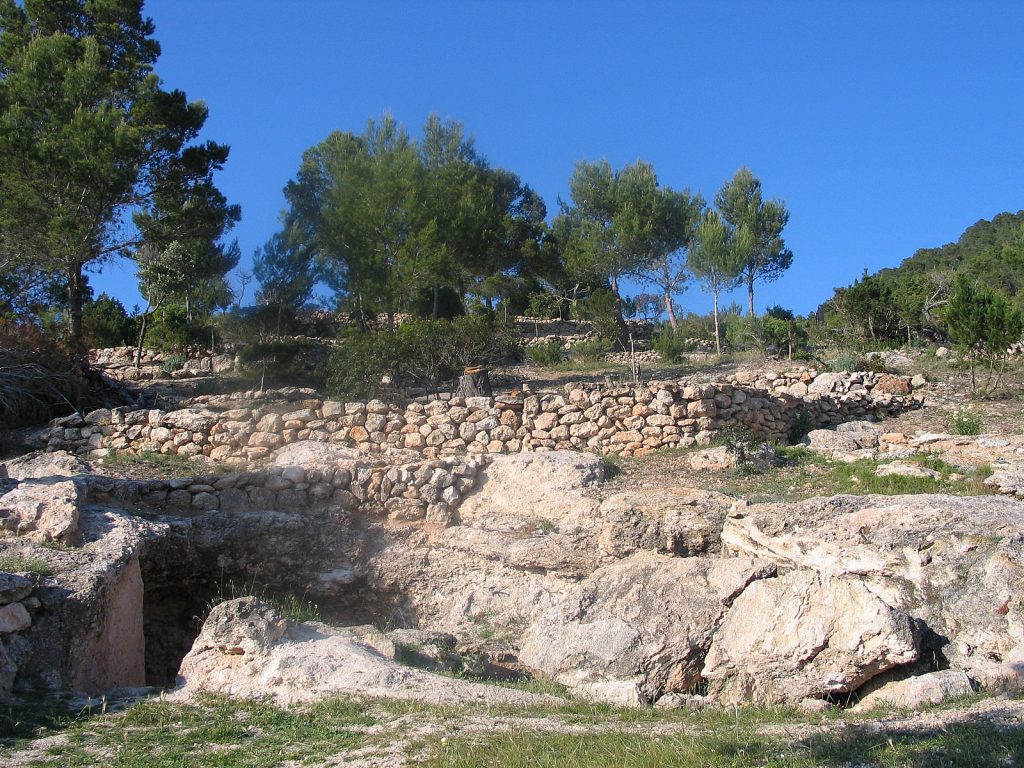
If you drive down the winding PMV-803-1 road on Ibiza’s southwest coast, you’ll eventually hit a blind curve where the horizon drops away. Suddenly, you’re staring at Es Vedrà, a 380-meter slab of limestone jutting straight out of the Mediterranean. This is the view that sells a million flights to Ibiza, and the beach of Cala d’Hort sits right at its base.
I usually avoid the most famous spots on the island in peak summer, but this crescent of sand and pebbles is the exception. You just have to know exactly how to handle the parking, the gritty sand, and the lunch reservations to actually enjoy it.
The Main Attraction: Staring Down Es Vedrà
You can’t talk about Cala d’Hort without talking about the rock. Es Vedrà dominates your entire field of vision from the moment you park. The local mythology surrounding it is exhausting: you’ll hear it’s the third most magnetic point on Earth (your compass will work just fine, I promise), a UFO base, or the tip of Atlantis.
Forget the myths. The reality is impressive enough. The sheer scale of the rock plays tricks on your depth perception. Sitting on the shore with a cold Estrella in hand, watching the light shift across the limestone face as the afternoon wears on, you get why people have been obsessed with this specific patch of water for centuries.
The Beach Itself: Pebbles, Pine Trees, and Patchy Wi-Fi
Cala d’Hort is not the place for soft, powdery white sand. It’s a mix of dark, coarse sand and smooth pebbles, backed by a wall of crumbling cliffs and pine trees. If you have sensitive feet, bring water shoes.
The setup here is decidedly old-school. There are no massive beach clubs pumping house music.
- The Water: The seabed is rocky, which makes for excellent snorkeling. The water is usually incredibly clear, though occasionally a late-afternoon swell can churn up some seaweed.
- The Sunbeds: There are a few rows of basic wooden loungers with straw umbrellas. In July and August, expect to pay around €25 to €30 for two beds. They sell out by 11:00 AM, so bring your own towels as a backup.
- The Annoying Bit: Mobile reception here is notoriously terrible. This means the card machines at the local vendors frequently drop connection. Bring actual euros. There is no ATM on the beach, and the nearest one in Sant Josep is a 15-minute drive away.
What to Do at Cala d’Hort
You’re mostly here to swim and stare at the rock, but a few specific moves make the day better.
- Hike the Cliffs: Facing the water, head to your right and look for the dusty trail leading up the cliffside. A ten-minute scramble gets you away from the beach crowds and gives you a wide-angle shot of the entire bay.
- Rent a Kayak: On calmer days, renting a paddleboard or kayak to get out on the water is brilliant. Just know the current can be deceptively strong the further you get from the cove. Also, don’t try to actually land on Es Vedrà—it’s a strictly protected nature reserve, and the Guardia Civil will slap you with a heavy fine if they catch you stepping foot on it.
- Book Lunch at Es Boldadó: There are traditional spots right on the sand, but Restaurante Es Boldadó sits high up on the cliff overlooking the bay. You need to book weeks in advance for a July weekend. Order the Bullit de Peix (a traditional Ibizan fish stew followed by a thin layer of rice cooked in the broth). It runs about €38 per person, and it’s worth every cent.
- Stay for Sunset: The sun setting behind Es Vedrà is iconic. The downside? Half the island knows this. By 7:30 PM in August, the beach fills with people, and yes, they will probably applaud when the sun disappears.
Planning Your Visit: Practical Tips
Getting There: The drive from Ibiza Town takes roughly 25 to 30 minutes. The parking situation is brutal. There’s a free dirt lot at the top of the hill, but by midday in high season, it’s a bumper-to-bumper nightmare. People end up abandoning their rental Fiat 500s along the steep access road. If you park half a mile up that road, remember you have to walk back up it in 35-degree heat after a long day in the sun. Arrive before 10:30 AM or after 4:30 PM.
Best Time to Visit: Skip peak summer if you can. Late September or early October is the sweet spot. The Mediterranean is still warm enough to swim in, but you won’t have to fight a family of five for a square meter of sand.
What to Bring: Cash (again, the card machines fail constantly), water shoes for the pebbles, and plenty of bottled water. The restaurants are great for a sit-down meal, but there isn’t a cheap supermarket on the beach to grab a quick €1 bottle of water.
Beyond the Beach: Exploring the Area
If you’re making the drive out to the southwest coast, you might as well bundle it with a few other stops.
- Torre des Savinar: Also known as the Pirate Tower. It requires a proper hike off a dirt road near the beach turnoff. Wear actual trainers, not flip-flops. The view from the top makes you feel like you’re hovering directly over Es Vedrà.
- Cala Molí: A 15-minute drive north up the coast. It’s a pebble cove that gets far less foot traffic than Cala d’Hort. Great for snorkeling, though the single beach club there has made it a bit pricier in recent years.
- The Hippy Markets: A lot of guides suggest pairing Cala d’Hort with the Las Dalias or Punta Arabí hippy markets. Be warned: those markets are in San Carlos and Es Canar, which is a solid 45-minute drive to the complete opposite side of the island. If you want a market vibe without the cross-island trek, check out the smaller artisan market in the nearby village of Sant Josep on Saturday mornings instead.
Cala d’Hort requires a bit of patience. The traffic can be annoying, and the sand isn’t the softest. But the minute you hit the water and look up at that massive limestone rock, the logistical headaches fade away. It’s an essential piece of Ibiza.
Recommended experiences
A few bookable experiences related to this topic:
Photo: Paul Hermans, via Wikimedia Commons