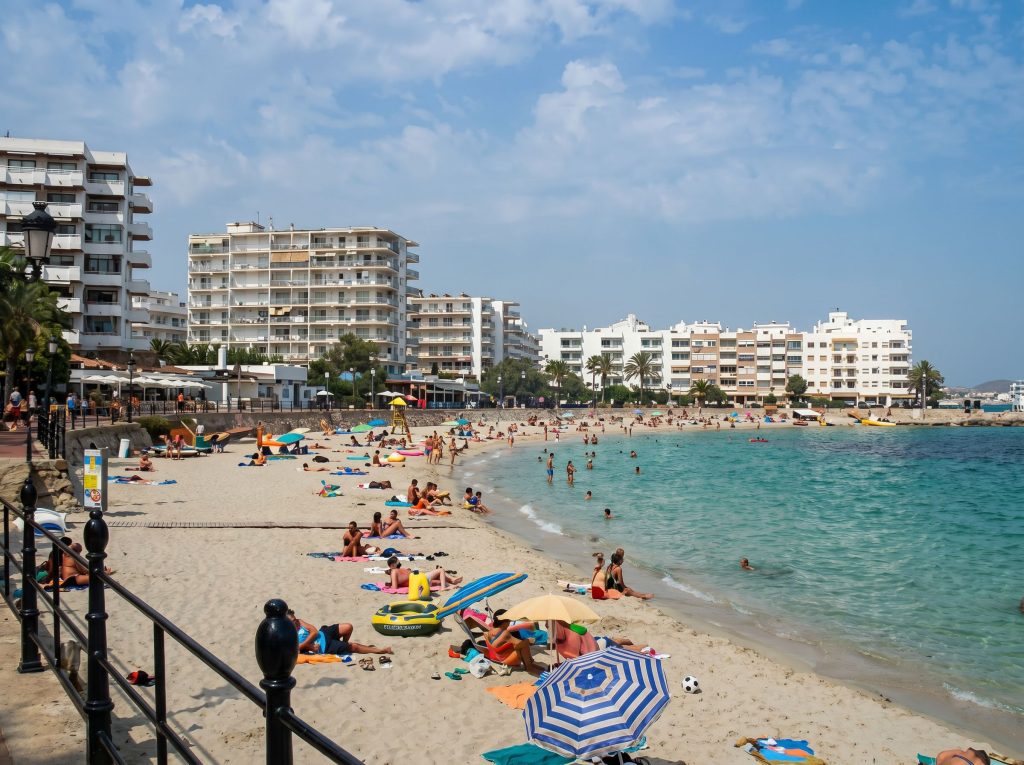
If you fly into Ibiza in late July, the arrivals hall is usually a sea of neon tank tops and tired club promoters. But drive twenty minutes east, and the heavy bass drops completely fade out. Santa Eulària des Riu is where you go when you want to sleep past 7 AM without earplugs. I spent a month based here last September, and while it completely lacks the island’s famous manic energy, it trades the hangover-cure cafes for actual bakeries and a shoreline that doesn’t smell like spilled beer.
The River That Isn’t, and the Promenade That Is
Let’s get the geography straight: “des Riu” means “of the river.” This town technically boasts the only officially recognized river in the Balearic Islands. Don’t expect the Amazon, though. By mid-August, the riverbed is mostly a dry ravine with a few muddy puddles, though the surrounding valley remains surprisingly green compared to the scorched earth over by San Antonio.
The real artery of the town is the Passeig Marítim. This paved coastal promenade runs the length of the beach, lined with palm trees and packed with locals walking their dogs around dusk. Grab a café con leche (around €2.20 if you avoid the flashy places right by the water) and just walk. A quick warning: the freestanding Euronet ATMs along the promenade will hit you with a €4.50 withdrawal fee. Walk two streets back to Carrer de Sant Jaume to find a proper bank machine that won’t gauge you.
The Hill Climb: Puig de Missa and Can Ros
Look up from almost anywhere in town and you’ll spot Puig de Missa. This 16th-century fortified church sits on a hilltop and looks exactly like a stack of white sugar cubes. It was originally built with massive, thick walls to fend off pirate attacks. Walking up there in the midday July heat is a mistake—I did it, and you will sweat right through your shirt. Do the climb before 10 AM.
The views over the Mediterranean are stellar, but the stark, rounded architecture of the church porch is what actually holds your attention. Right on the way down the hill, you’ll hit Can Ros, which houses the Museu Etnogràfic de Ibiza. It’s an old farmhouse turned museum. For about €3, you get to walk through rooms of antique olive presses, traditional farming tools, and old Ibizan clothing. It takes exactly thirty minutes to see it all, offering a quiet escape from the afternoon sun.
Sand, Seaweed, and the Marina
The main beach here is a 250-meter curve of pale sand. Because it’s backed by the town and sheltered, the water is incredibly calm. If you visit in May or late October, you might notice piles of dried brown seagrass washed up on the shore. This is Posidonia. It looks messy, but it’s protected by local law because it acts as a natural filter to keep the water crystal clear. During peak summer, the council clears it out daily. Two sunbeds and an umbrella will set you back around €18 for the day.
Further north, past the sand, you hit the marina. It’s packed with sleek yachts and a handful of working fishing boats. You can catch the ferry to Formentera from here, which I highly recommend. Just keep in mind that while the morning ferries run fairly on time, the afternoon return boats are notoriously 20 to 30 minutes late. Don’t book a tight dinner reservation for the night you get back.
Carrer de Sant Vicent and Finca Dining
Most tourists eat directly on the waterfront. That’s fine if you don’t mind paying a premium for the sea breeze. If you want better food, head one block inland to Carrer de Sant Vicent. It’s entirely pedestrianized and crammed with restaurant tables spilling out onto the pavement. You can get an excellent pescado a la sal (fish baked in a thick crust of sea salt) at a few of the older establishments here.
For a totally different atmosphere, rent a car and drive ten minutes into the interior. The hills surrounding Santa Eulària are dotted with old fincas—traditional farmhouses—operating as restaurants among the pine trees and orange groves. Nightlife in this part of the island means sitting on a terrace with a glass of local Monastrell wine until midnight, rather than dodging foam cannons at 4 AM.
Getting There and Getting Around
A standard taxi straight from the airport arrivals rank to Santa Eulària costs around €30 to €35, depending on the time of day and traffic. You can also take the L24 bus, but it meanders through several other towns and turns a quick twenty-minute drive into a frustratingly long ordeal. Pay for the cab. Once you’re unpacked, you have a highly walkable base that puts you in the perfect position to explore the wilder, cliff-heavy northern coast of the island.