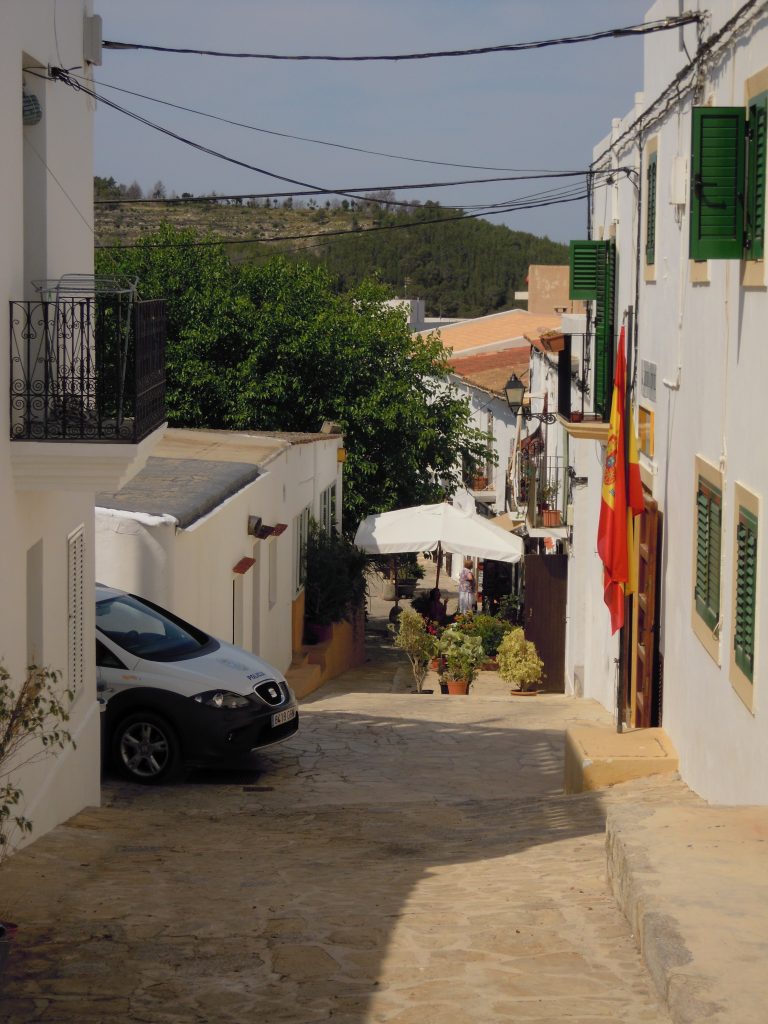
The Rural North
Most visitors stick to the south of Ibiza. They want the mega clubs. The municipality of Sant Joan de Labritja covers a huge chunk of the north but feels completely empty by comparison. You get terraced fields and thick pine forests instead of concrete hotel blocks. The air actually smells like dry pine needles when you roll the windows down. Whitewashed fincas sit on the hillsides exactly as they have for decades. It is the agricultural center of the island. And it makes a brilliant base if you want a quiet place to sleep.
The Las Dalias Market
You will inevitably end up at the Las Dalias market in the village of Sant Carles de Peralta. It’s one of Ibiza’s longest-running hippy markets, dating back decades. Now it runs every single Saturday from 10:00 in the morning until 19:00. The stalls sell hand-woven textiles and thick bars of organic soap wrapped in brown paper that always manages to tear at the bottom of your tote bag. The smell of patchouli incense gets pretty intense by the main stage where the live bands play.
During the summer months they also run a night market on Mondays and Tuesdays. That one goes from 19:00 until 01:00. You eat international street food under strings of bare bulbs while a DJ plays a low-key set.
The Northern Beaches
The water up here looks different. You trade the massive sandy stretches of the south for narrow rocky coves.
Portinatx
The main resort up north gives you modern amenities without the chaos. You have three sandy spots to choose from right next to each other. S’Arenal Petit, S’Arenal Gros and Es Portitxol all have incredibly clear water. You can walk out to the Punta de Moscarter lighthouse to get your bearings. It has thick red and white stripes painted all the way up the side.
Cala Benirràs
Expect to walk on smooth pebbles rather than soft sand. People come here specifically for the Sunday drum circles. Dozens of drummers set up on the beach right before sunset and play until it gets dark. The crowd gets massive in July and August. Parking fills up fast.
Cala Xarraca
Red clay cliffs surround this quiet inlet. The seabed has mineral-rich mud that people dig up and rub directly on their skin. It dries into a tight gray crust in the sun. Snorkelers spend hours looking at the underwater rock formations near the edges of the bay.
Driving the Back Roads
Get a rental car. A scooter works too if you don’t mind the dust and the occasional gravel patch throwing your tires around. The interior roads cut right through ancient olive orchards and dense pine woods. Villages like Sant Miquel and Sant Joan have heavy fortified churches built centuries ago. You can grab a coffee in the main square and just watch the locals go about their morning. Eventually you should book a table at one of the rural finca restaurants. They serve meals made from ingredients grown right on the property.
Practical Logistics
Finding a place to sleep is the easiest part of the trip. The hills are full of converted agricultural estates called agroturismos. You can also rent an entire private finca if you have a larger group.
Getting up to the north takes about 40 minutes of driving from Ibiza Town and the main airport. Do not rely on taxis for this area. You absolutely need your own rental car to get between the beaches and the inland villages.
The heat drops off significantly if you book your trip for May or October. Those months give you empty hiking trails and plenty of space to park at the beaches. Summer is hot and busy.